
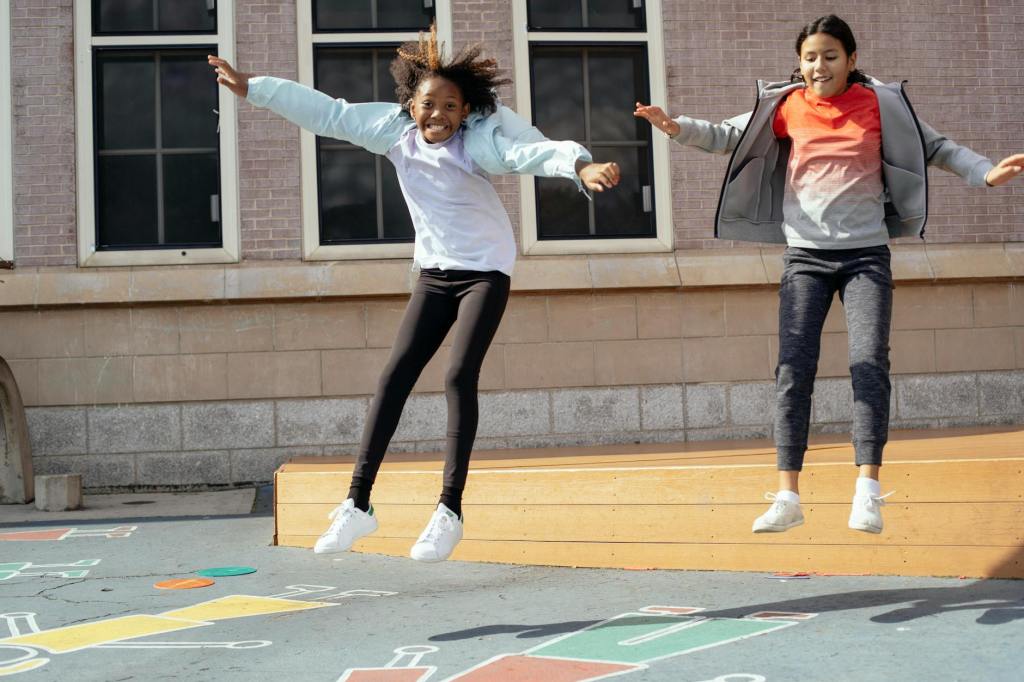
How Physical Movement Increases Mental Acuity
Typical classrooms are dominated by desks and chairs. While teachers have incorporated flexible seating in many schools with bean bags, standing desks, comfy corners, and the like, the seated student remains the standard in our classrooms.
Annie Murphy Paul, a journalist and the author of The Extended Mind, contends that, “the mind constructs our thought processes from the resources available outside the brain” and encourages her readers to embrace physical movement in order to tap into additional brain capabilities. Whether citing studies that hand gestures signal understanding of an event prior to verbal recognition, or the benefits of walking and talking, she suggests that human intellectual feats rise to their highest levels when accompanied by physical movement.
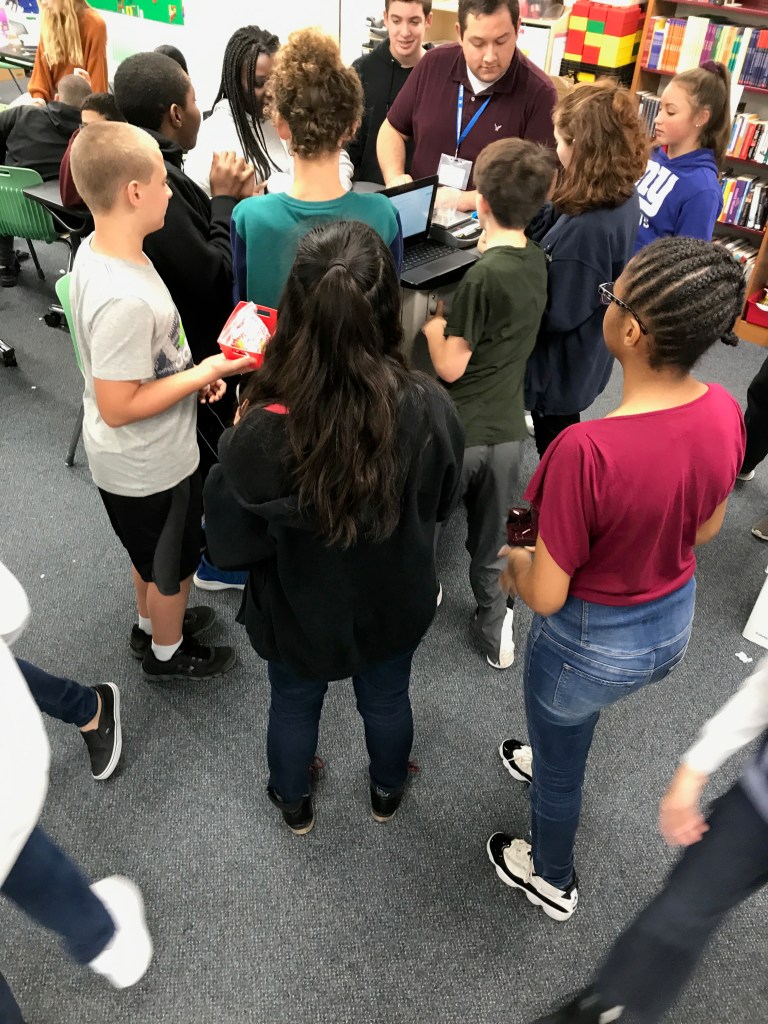
Students gather to share and discuss design challenges.
For instance, having students act like the solar system or add movement to an anatomy lesson results in greater retention compared to basic memorization: “The difference such minimal instruction made in participants’ ability to recall information, they noted, was “striking”: students who incorporated movement into their learning strategy remembered 76 percent of the material, while those who engaged in “deliberate memorization” recalled only 37 percent” (Paul, The Extended Mind).
TAKEAWAYS:
Model brain supports with students. For instance, setting a timer for brain breaks incorporating movement allows students to act cooperatively to refocus rather than escaping to a less rejuvenating tasks such as a game or acting out with a fellow student. Middle and high school students require 2-3 minutes of brain breaks for every 20-30 minutes of learning, according to neurologist Judy Willis in this article.
Normalize acting out lessons rather than relying on a lecture or digital format to share and ask for a demonstration of understanding. Ideas for movement from this Edutopia article include drawing a concept and acting as a “human lab” to model science experiments.
Movement and collaboration leads to new ideas. Providing time for students to take walks outside or, depending on your location, take a team walk up and down the hall allows young minds to consider ideas they had not previously considered. More challenging bouts of exercise can lead to pronounced improvements in academic output:
“Some benefits of physical activity on brain health happen right after a session of moderate-to-vigorous physical activity. Benefits include improved thinking or cognition for children 6 to 13 years of age and reduced short-term feelings of anxiety for adults. Regular physical activity can help keep your thinking, learning, and judgment skills sharp as you age. It can also reduce your risk of depression and anxiety and help you sleep better.”
RESOURCES:
Brain Breaks for High Schoolers by Paige Tutt on Edutopia (2023).
The Extended Mind by Annie Paul Murphy
Home Page of Judy Willis, M.D. and M.Ed.
Build Movement into Brain Activity by Stephen Merrill & Sarah Gonser on Edutopia (2021).
Physical Activity Guidelines (2016). U.S. Department of Health and Human Services.
 Gifted Weekly