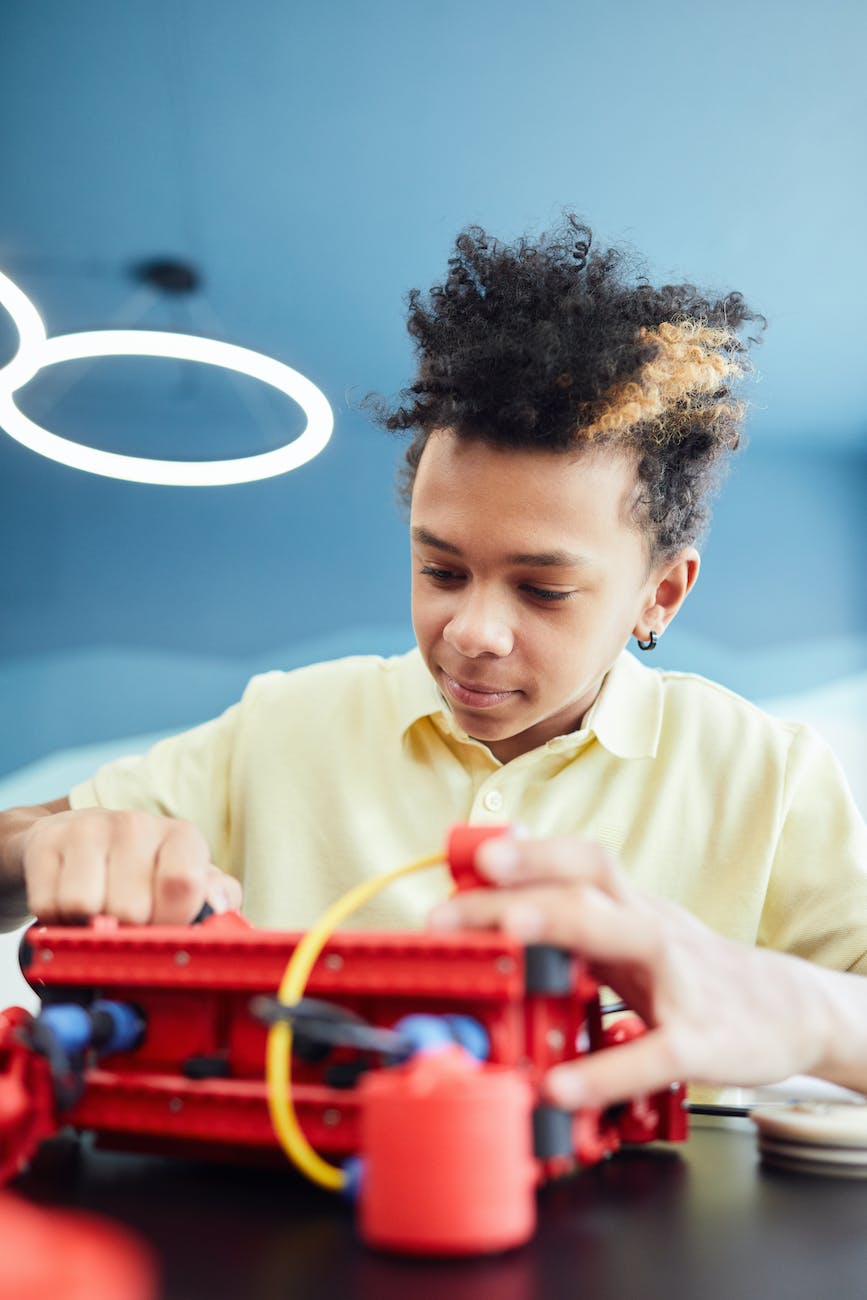
Through investigating the learning experience of over 400 students against three different scales, researchers in Turkey sought to understand how an emphasis on Autonomous Learning would impact creativity and problem-solving. They note that in our current high-tech environment, basic comprehension skills across the disciplines are not enough. All students, particularly those with high academic and intellectual ability, must be challenged to develop higher-order thinking underpinned by creativity and problem-solving skills.
How do they define these key terms?
What is Autonomous Learning? Students take responsibility for their learning (p. 381, citing Holec) according to their “needs and aims” according to the Bergen definition by Leni Dam (p. 381, citing Sinclair).
What is Creative Cognition? Students devise new or original approaches in a discipline, from arts to sciences.
What is Problem Solving? “The problem solver should define the problem, realize its requirements, choose the special and general skills that he has learned before in the solution of this new problem and
follow this application in the solution phase (Mayer & Wittrock, 1996)” (p. 381).
Findings (abbreviated):
Autonomous Learning + Creative Cognition = increased Problem Solving
Problem-Solving = increased Creative Cognition
Autonomous Learning = mediated effect of Problem-Solving on Creative Cognition
“Autonomous learning, problem-solving, and creative cognition are some of the concepts that have a significant influence on improving individuals’ higher-order thinking skills.”
p.384
Takeaways:
Although the report does not recommend specific curricula or pedagogy, the findings suggest that a greater emphasis on autonomous learning will lead to greater creativity and problem-solving skills. In some senses, this supports the enrichment approach driven by student choice. Nonetheless, we’ve also found the importance of setting clear goals in learning for students to build confidence and accountability (Be Specific: Planning for G/T Outcomes and Motivation Matters for Gifted Growth).
In short, allowing for student autonomy in our gifted programs will enable students to thrive when confronted with challenging intellectual problems and, we hope, develop the skills necessary to solve current and future problems.
Related Resources:
PBS Design Squad Solving a problem such as “Design a building that can survive and earthquake” using the design process.
Breakout EDU Student sign up provides access to lock of the day (free). Premium version allows for much more, including students developing their own games.
Genius Hour Provide a framework and then encourage student choice as well as frequent check-ins. Forms and suggestions also at The Gifted Guide.
SOURCES
Arslan, N., Arslan, S., & Çelik, K. (2023). Creative cognition, autonomous learning, and problem-solving: A mediation model. Hacettepe University Journal of Education, 38(3), 380-387. https://doi.org/10.16986/huje.202
 Gifted Weekly